Stay-In vs Stay-Out Kasambahay: Rules, Pay, and Rights
Stay-in or stay-out (uwian) kasambahay job? See what each means, what RA 10361 covers for both, and what to ask before you accept.

Charles writes for Helpers.
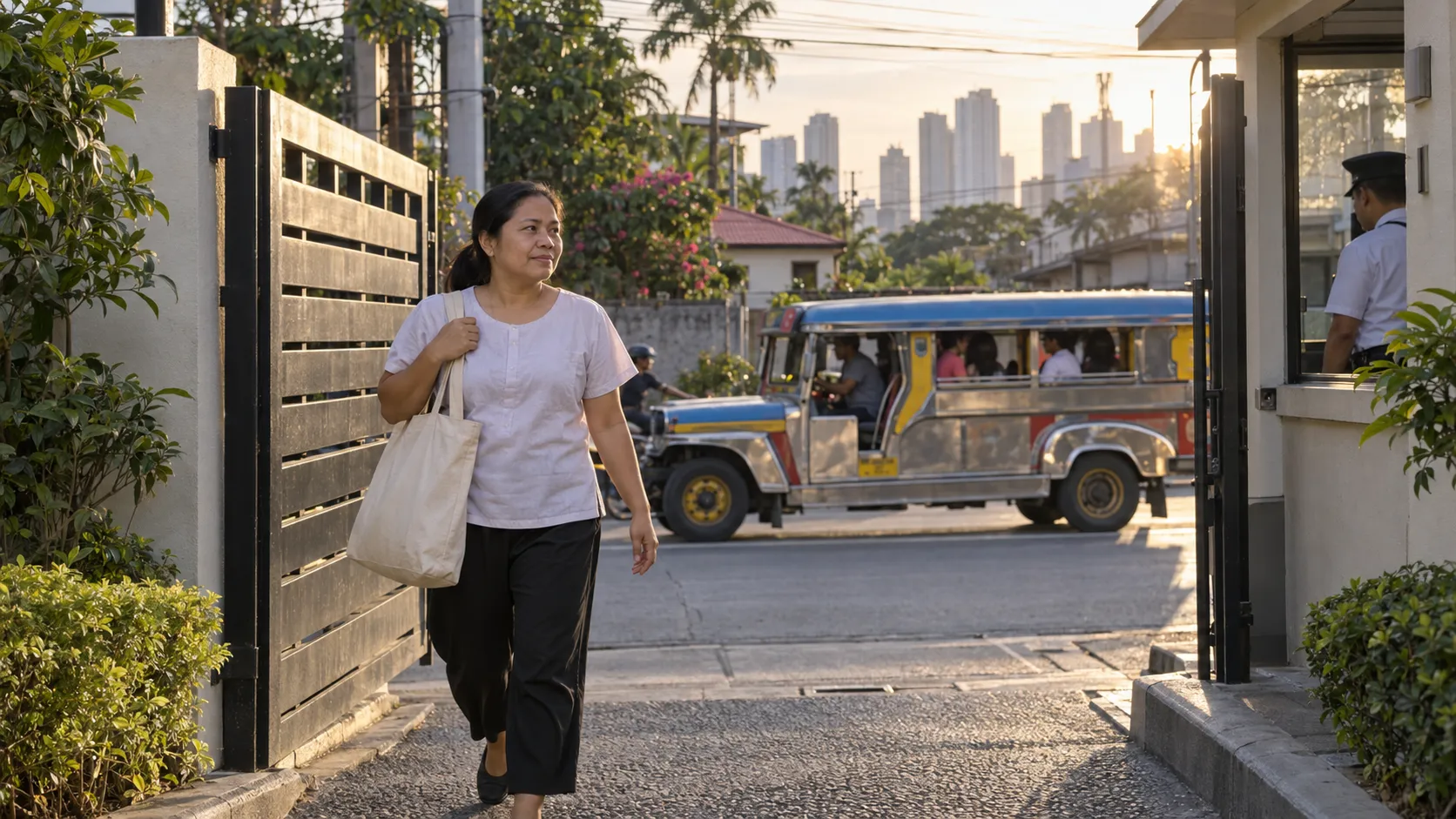
Direct answer: A stay-in kasambahay lives in the employer's home. A stay-out kasambahay, also called uwian or live-out, works there and goes home each day. Republic Act 10361 covers both. The minimum wage, weekly rest day, 13th-month pay, written contract, and SSS, PhilHealth, and Pag-IBIG coverage do not depend on where you sleep. What changes is room and meals for stay-in work, and fare, hours, and privacy for both.
The statute is explained in the Kasambahay Law guide. More pages for helpers are on the helper guides hub.
Job posts in the Philippines use the words stay-in, stay-out, live-in, live-out, and uwian as if everyone shares one meaning. They do not. One family means "sleep here Monday to Saturday." Another means "come at 7am, leave at 6pm." A third means "stay-in, but you go home on weekends." Each version changes your pay, your rest, and your costs.
This guide is for a Filipino helper choosing between the two. It explains what the law says about each setup, what the family must provide, how the two compare, and what to ask before you say yes. Families can read it too, because both sides are bound by the same written terms.
What stay-in and stay-out mean in Philippine job posts
The words are not defined the same way in every post, so read the schedule, not the label. The implementing rules of the Batas Kasambahay define only one of them. A live-out arrangement is one where the kasambahay "works within the employer's household but does not reside therein." Anything else, where you live in the household, is live-in.
Here is how the terms usually show up:
- Stay-in or live-in. You sleep in the family home. Meals and a sleeping space are part of the job.
- Stay-out, live-out, or uwian. You travel to work and go home after your shift. Uwian comes from "uwi," to go home.
- Stay-in, uwi weekends. You sleep at the house on workdays and go home for your rest day. Many families call this stay-in.
- Stay-out, 6 days. You work six days a week and rest one. The post should say which day.
- Flexible. You will take either, and the family may offer a different rate for each.
Do not treat the label as a contract. A post that says "stay-out" can still expect you to arrive at 5am and leave at 9pm. A post that says "stay-in" can leave the room, meals, and rest hours unstated. Ask for the actual hours and the actual room before you accept.
Does RA 10361 cover stay-out workers?
Yes. This is the most common question about stay-out work, and the text is clear.
The Act defines a domestic worker as "any person engaged in domestic work within an employment relationship," with examples such as general househelp, yaya, cook, gardener, and laundry person. The implementing rules go further. They apply to the kasambahay "whether on a live-in or live-out arrangement" and add "any person who regularly performs domestic work in one household on an occupational basis." You can read both in Republic Act 10361 and its implementing rules and regulations. Congress approved the Act on 18 January 2013, and DOLE and the other agencies signed the rules on 9 May 2013.
The rules list four groups that are not covered:
- Service providers, meaning people or businesses that run an independent business and do a job for a household in their own way, free from the household's control.
- Family drivers.
- Children under a foster family arrangement who are given schooling and an education allowance.
- Anyone who does domestic work only occasionally or sporadically and not on an occupational basis.
Notice what is not on the list. Sleeping at your own home is not an exception. A stay-out helper who comes on fixed days, follows the family's instructions, and is paid for her time is a kasambahay. A stay-out cleaner who sets her own days, brings her own supplies, quotes a price per visit, and serves several clients may be a service provider instead. Our guide on who counts as a domestic worker in the Philippines walks through the grey cases, including the labandera who comes twice a week and the helper with more than one household.
If you are unsure which side you fall on, ask DOLE or your barangay before you assume either way. The label on the job post does not decide it.
Minimum wage applies whether you sleep there or not
The wage floor depends on the region where you work. It does not depend on whether you live in.
Take the National Capital Region. Wage Order No. NCR-DW-06 raised the monthly minimum for domestic workers from ₱7,000 to ₱7,800. It states that it applies to all domestic workers "whether on a live-in or live-out arrangement." The wage board approved it on 15 January 2026, and it took effect on 7 February 2026, according to the NWPC table of current domestic worker minimum wages as of 9 July 2026. That table lists the figure for each region. Because the numbers differ by region and wage boards keep issuing orders, use our kasambahay minimum wage guide by region or the NWPC table to check yours before you negotiate.
Three points matter when a family offers a stay-in job at a lower number:
- A room is not a pay cut. RA 10361 makes board and lodging the employer's duty, and the NCR wage order says no deductions "shall be made other than those mandated by law." Do not sign a contract that subtracts your bed, meals, or electricity from the minimum.
- Pay above the floor is yours to negotiate. The NCR wage order lets households and workers agree on a competency-based scheme over and above the minimum. Your skills and the duties can raise your number.
- Stay-in is not automatically cheaper work. It can mean a longer day, less privacy, and being on call. Price the actual job. Our guide to setting your rates as a helper shows how.
Rest hours and the weekly rest day
Two rest rules apply to every kasambahay, live-in or live-out.
Daily rest. Section 20 of the Act gives the domestic worker "an aggregate daily rest period of eight (8) hours per day." The word aggregate matters. It means eight hours added up across the day. It does not promise eight unbroken hours, and the Act sets no daily cap on working hours. Hours of work and "proportionate additional payment" belong in the written contract, so put your start time, end time, and extra-hours rate on paper.
This rule bites hardest for stay-in work. A live-in yaya who gets up twice at night for a baby and starts again at 5am can still be counted as rested by an employer who adds the hours loosely. If you take a stay-in job, ask what time your day ends and whether night duties are part of the job.
Weekly rest. Section 21 gives you at least 24 consecutive hours of rest in a week. You and the employer agree the rest day in writing, and the employer must respect your preference when it rests on religious grounds. The law lets you offset an absence with a rest day, waive a rest day for equivalent daily pay, or accumulate up to five rest days, so long as both sides agree.
A stay-out helper often feels this rule less sharply, because the evening commute home is a daily break. Do not let that blur the weekly rest. A six-day stay-out job still needs a named rest day. The rules on rest, five days of service incentive leave after one year, and holiday pay are in our guide on kasambahay rest day, leave, and holiday pay.
What the family must provide to a stay-in helper
For stay-in work, Section 6 of the Act and Section 13 of the implementing rules set the minimum. The employer provides:
- at least three adequate meals a day, taking your religious beliefs and cultural practices into account;
- a humane sleeping arrangement that is safe and respects your privacy;
- appropriate rest and medical assistance, such as first-aid medicines, when you are ill or injured during service, without loss of benefits.
The employer may not withhold meals, lodging, or medical help as punishment.
"Humane sleeping" has no square-metre rule in the text, so ask to see the room and bed before you accept. A shared space with a child or a patient, a spot in a corridor, or a room you cannot lock may not meet the intent of the rule. Check where you will keep your belongings, where you will bathe, and whether you can reach a phone when you are off duty. Section 8 requires the employer to give you access to outside communication during free time, and during emergencies even during work time.
What changes for a stay-out helper
The implementing rules say a live-out kasambahay "shall be provided space for rest and access to sanitary facility." That is the whole housing duty for stay-out work. You are not entitled to a bedroom, but you are entitled to a place to rest during the day and a toilet you can use.
The rules list three adequate meals among the basic necessities the employer provides, and they do not say how that applies when you go home each night. In practice, stay-out arrangements vary. Some families feed you lunch and snacks. Some give a meal allowance. Some give nothing. Ask which one this family means, and write it down.
On fare, the Act and its implementing rules set no daily transport allowance for a live-out worker. The only transport-related rule covers deployment expenses, the one-time cost of moving you from your place of origin to the workplace, which the employer pays. Daily commuting is negotiable. A long commute can cost you a meaningful share of a month, so count it before you accept a rate. A stay-out helper who spends two hours and a few jeepney or tricycle fares each way is working a longer day than the schedule shows.
Benefits and contributions for both
Section 30 of the Act covers every domestic worker who has served at least one month under SSS, PhilHealth, and Pag-IBIG. It does not exclude live-out workers. The employer shoulders the contributions, except that a worker earning ₱5,000 a month or more pays the proportionate share. The NWPC table shows every regional minimum above that line, so in practice most households split the contributions with the helper.
- SSS. The SSS kasambahay page explains the Kasambahay Unified Registration System, which registers you and your employer for all three agencies with one form. The SSS household employer page says the employer must deduct your share if you earn more than ₱5,000 and remit it with the employer share. It also says you stay entitled to SSS benefits even when a household employer fails to report and remit.
- PhilHealth. PhilHealth Advisory 2025-0002 sets the premium at 5 percent of monthly income, with an income floor of ₱10,000 and a ceiling of ₱100,000. A kasambahay paid below the floor is computed on it, so the minimum monthly premium is ₱500. Our guide on PhilHealth and Pag-IBIG for kasambahay shows how the split works.
- Pag-IBIG. It also covers you from month one. The rate and fund salary cap are in the same guide, and our SSS contribution guide for kasambahay has the SSS table.
You also get 13th-month pay after one month of service, paid no later than 24 December or when you leave. Neither live-in nor live-out status changes this.
Privacy and safety
RA 10361 protects privacy for every kasambahay. Section 7 guarantees "respect for the privacy of the domestic worker" and extends it to all forms of communication and personal effects. Section 5 bars abuse, violence, harassment, and acts that degrade your dignity. Section 19 requires the employer to safeguard your health and safety. These sections do not carve out stay-out work.
The practical risks differ by setup.
For stay-in work, the main issues are the room, the lock, and being off duty while still in the house. Agree that you will not be asked for extra tasks at night unless the contract says so. Keep your phone and your personal documents with you. An employer may require pre-employment papers such as an NBI or barangay clearance, but holding your original IDs is a different thing.
For stay-out work, the main issues are the trip home and the end of the day. Agree a latest finishing time and who pays for transport if the family keeps you late. If you finish after dark, ask whether the family will pay for a safer ride. Tell a family member where you work and when you leave.
For both, the employer cannot make you pay a deposit for loss or damage, cannot hold your wages, and cannot place you in debt bondage. Those protections are in Sections 14, 15, and 28 of the Act.
Stay-in vs stay-out comparison
Use this table as a starting point. Fill in the real answers for each job.
| Point | Stay-in | Stay-out (uwian) |
|---|---|---|
| Minimum wage | Regional floor applies | Regional floor applies, same number |
| Room | Employer provides a humane, safe sleeping arrangement | Employer provides space to rest and a toilet |
| Meals | At least three adequate meals a day | Not spelled out for live-out, so agree in writing |
| Daily fare | None for the commute | Not set by the law, so negotiate |
| Rest | 8 hours aggregate daily, 24 hours weekly | Same rules |
| Contributions | SSS, PhilHealth, Pag-IBIG after one month | Same rules |
| Privacy | Shared home, so the room and lock matter | Home life stays separate from work |
| Risk | Long on-call days, unclear end of shift | Late commutes, longer total day |
| Pros | No commute, meals and room covered, lower living costs | Your own home life, clearer end of day, family time |
| Cons | Less private time, harder to refuse extra work | Fare and meal costs, travel time, strict arrival time |
Neither setup is better by default. Stay-in can suit a helper who is saving money and has no family nearby. Stay-out can suit a helper with children, a partner, or parents to look after. Pick the one that fits your life, then make the paperwork fit it.
Questions to ask before you accept
Ask these before you give an answer. Write the replies into the contract. The Act requires a written employment contract in a language you and the employer both understand, and a signed copy for you. Section 11 lists the terms it must cover, including duties, pay, authorised deductions, hours of work, rest days, board and lodging, and termination.
- What are the exact working hours, and what time does the day end?
- Who else lives in the house, and who will I care for or clean for?
- Is the job stay-in or stay-out, and can I see the room if it is stay-in?
- What day is my weekly rest day, and may I go home on it?
- What is the monthly pay, and when is payday?
- Are meals included, and which ones?
- Who pays for my fare, and what happens if I work late?
- Which deductions will appear on my payslip, and who pays SSS, PhilHealth, and Pag-IBIG?
- What extra duties, such as driving, cooking for guests, or caring for a second household, will you ask for later?
- What happens if either of us wants to end the job?
If a family refuses to put the answers in writing, treat that as information about how the job will go. Our guides on the Kasambahay contract and loan agreement and the Kasambahay payslip show what a clear paper trail looks like.
How to state your preference on your Helpers profile
Your Helpers profile has a living arrangement setting with Live-in, Live-out, and Flexible options. Choose the one that matches what you will really accept. Setting Flexible when you only want stay-out leads to interviews you will decline.
Then add detail where the profile lets you:
- Your rest day preference, for example Sunday.
- Your area and how far you can travel, if you choose stay-out.
- Your latest finishing time, if you can only work until a set hour.
- Whether you want to go home on weekends, if you choose stay-in.
- The duties you do and do not take on.
Browse the Helpers jobs board and read each post's arrangement and schedule before you apply. Do not tick Flexible just to get more messages. A helper who clearly says "stay-out, Monday to Saturday, home by 6pm" gets better matches than one who says "any."
Helpers is a marketplace that connects families and helpers. It does not run DOLE registration, payroll, or legal disputes. For a complaint about pay or treatment, contact DOLE or your barangay.
Frequently Asked Questions
What does stay-in mean in a kasambahay job post?
Stay-in means you live in the employer household, usually in a room or sleeping space the family provides. Under RA 10361 the employer must give you at least three adequate meals a day and a humane, safe sleeping arrangement. Stay-in does not lower the legal minimum wage, and it does not remove your weekly rest day.
Does the Batas Kasambahay cover stay-out or uwian workers?
Yes. The implementing rules apply to a kasambahay "whether on a live-in or live-out arrangement" and define live-out as working in the employer household without living there. The exceptions are service providers, family drivers, foster children, and people who do domestic work only occasionally or sporadically and not on an occupational basis.
Is the minimum wage lower for a stay-out helper?
No. Regional wage orders for domestic workers apply to live-in and live-out workers alike. The wage floor depends on where you work, not on where you sleep. A family cannot subtract your room, food, or commute from the minimum wage, and the wage order allows no deductions other than those required by law.
Do stay-out helpers get SSS, PhilHealth, and Pag-IBIG?
Yes. Section 30 of RA 10361 covers a domestic worker with at least one month of service under SSS, PhilHealth, and Pag-IBIG. It does not make an exception for live-out workers. The employer registers you, remits the contributions, and deducts only the worker share that the law allows.
Who pays for the daily fare and meals of a stay-out helper?
The Act and its implementing rules do not set a daily fare allowance for live-out workers, so the amount is negotiable. The rules list three adequate meals among the basic necessities an employer provides, but they do not say how that works on a live-out shift. Agree fare and meals in writing before your first day.
A practical next step for helpers
Decide whether you want stay-in or stay-out, then write down the hours, rest day, fare, and meals you will accept. Create your helper profile, set your living arrangement, and read more in our helper guides. Apply only to jobs whose schedule matches your answer.
Sources checked for this guide
- Republic Act No. 10361, Domestic Workers Act (Batas Kasambahay) (Lawphil Project, Arellano Law Foundation; accessed 2026-10-16)
- Implementing Rules and Regulations of Republic Act No. 10361 (National Wages and Productivity Commission, Department of Labor and Employment; accessed 2026-10-16)
- Wage Order No. NCR-DW-06 (Regional Tripartite Wages and Productivity Board, National Capital Region; accessed 2026-10-16)
- Current Monthly Minimum Wage for Domestic Workers as of July 9, 2026 (National Wages and Productivity Commission, Department of Labor and Employment; accessed 2026-10-16)
- Kasambahay (Social Security System, Philippines; accessed 2026-10-16)
- Household Employer (Social Security System, Philippines; accessed 2026-10-16)
- PhilHealth Advisory No. 2025-0002 on the premium contribution schedule (Philippine Health Insurance Corporation; accessed 2026-10-16)
- Helpers jobs and profiles (Helpers; accessed 2026-10-16)
Last editorial review: 2026-10-16. Sources and regulated claims can change; confirm the current position before acting.
Related Guides

Domestic Helper Salary in Dubai for Filipinos: What to Check
What a Filipino domestic helper can expect for salary in Dubai and the UAE: DMW wage floor, MOHRE rules, rest and leave, contract checks, and red flags.
Saudi Arabia Domestic Helper Salary for Filipinos: What to Check
What a Filipino domestic helper should check about Saudi Arabia salary: DMW floor, SAR 1,500, Musaned contract, rest day, leave, end of service, and red flags.
Singapore Domestic Helper Salary: Guide for Filipino Workers
Salary rules for Filipino domestic helpers in Singapore: the SGD 650 DMW floor, pay timing, rest days, deductions, no placement fee, and contract checks.