NBI Clearance for Helpers: Requirements, Fee, and Hits
How a Filipino helper applies for an NBI clearance online, what to bring, what a hit means, how validity and renewal work, and how to avoid fixers.

Charles writes for Helpers.
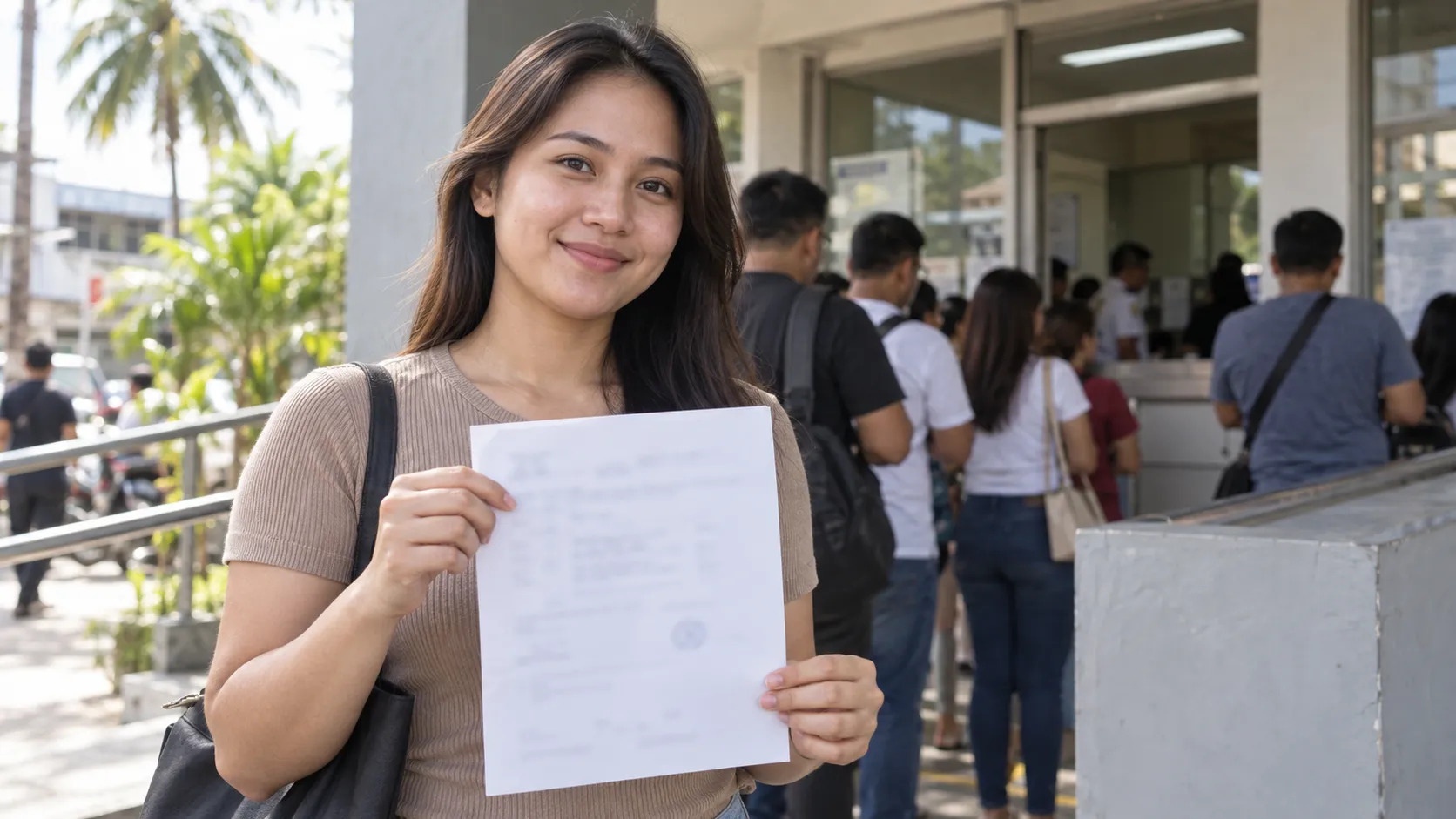
Direct answer: To get an NBI clearance, register on clearance.nbi.gov.ph, fill in your profile, pick a branch and time slot, pay the reference number, then visit the branch with two valid government-issued IDs for your photo, fingerprints, and signature. If the system flags a hit, NBI gives you a date to come back. Never pay a fixer, and share only a labelled copy of the clearance with an employer.
Many Filipino families ask a kasambahay, yaya, caregiver, driver, or housekeeper for an NBI clearance before the first day. Agencies and foreign employers ask for it too. The document is cheap and quick when your name is clear, and it is slow and stressful when you meet a hit or a scam site.
This guide uses NBI's own pages and the portal as they stood on 16 October 2026. Where NBI does not publish a detail, the guide says so and tells you where to check. If you are building a full job folder, read this next to how Helpers approaches verification and the Helpers guide to getting hired as a helper.
What an NBI clearance is and what it shows
An NBI clearance is a certificate from the National Bureau of Investigation, an agency under the Department of Justice. NBI checks the details and fingerprints you give against its records and prints a certificate for the purpose you choose.
A clean clearance means NBI found no matching record under your details when it was issued. It does not mean you have been checked for every kind of risk. It does not show your work history, your skills, how you treat children or older adults, or whether past employers were happy with you. It also does not cover something that happened after the date of issue.
That is why families should use it as one piece of a hiring check, not the whole check. A family still needs to speak to your previous employers, read your resume, and agree your duties in writing. Helpers explains the same limits to families in its Helpers background check page, where Helpers says it reviews the documents sent to it and does not confirm them with the issuing agency.
Why families and agencies ask for it
Under Republic Act 10361, the Domestic Workers Act, an employer may ask a domestic worker for these before the employment contract is signed:
- a medical or health certificate from a local government health officer;
- barangay and police clearance;
- NBI clearance; and
- an authenticated birth certificate, or another document that shows your age, such as a voter's ID, baptismal record, or passport.
The same section says these become standard requirements when a private employment agency arranges the job. It also says the employer or the agency pays for them. Read the text of Section 12 on Lawphil. If a family says you must pay for your own clearance as a condition of the job, ask them to read that section with you. Some helpers pay anyway to speed things up, and that is your choice, but you should know the law puts the cost on the employer or agency. For more on the hiring side, see how families hire a kasambahay legally.
NBI clearance requirements and fee
What you need
- An email address and mobile number you control, because the portal sends a one-time password (OTP) when you register.
- Your full name, birth date, and family details exactly as they appear on your IDs. NBI's how-to page tells applicants to match the spelling on their valid IDs.
- Two valid government-issued IDs for the branch visit. NBI's portal tells you to bring two, and its Citizen's Charter lists two valid government IDs as the requirement.
- Your reference number and proof of payment, printed or saved on your phone.
Accepted IDs
The portal's ID picker, read on 16 October 2026, lists these options:
- Senior citizen ID
- UMID (SSS and GSIS)
- Passport
- National ID
- PhilHealth ID
- Voter's ID or certificate of registration
- BIR ID
- PRC license
- PSA birth certificate
- Driver's license
- Pag-IBIG ID
- Postal ID
NBI's how-to page adds that IDs should be original and not expired. If you are missing one, a PSA birth certificate is on the portal list, so you can order one rather than skipping the appointment. Lists change. Open the portal and read the current one before you queue.
The fee
NBI's mailed-clearance page states a clearance fee of 130 pesos, and the portal shows a 130 peso multi-purpose clearance. The how-to page says a small e-payment service charge applies on top. The amount depends on the payment channel and can change, so pay the total the portal shows for your reference number.
You may see older numbers online. NBI's Citizen's Charter page for clearance applications lists 115, 165, and 415 pesos. Treat those as outdated unless the portal shows them for you. If a person or page asks for a higher amount than the portal, stop and take a screenshot.
First-time jobseekers do not pay NBI. See the section on the free route below.
How to apply online, step by step
- Open the official portal. Type clearance.nbi.gov.ph into your browser. The page title reads "Official NBI Clearance." Do not tap an ad or a link from a chat message.
- Register. Use your own mobile number and email. Enter the OTP the portal sends.
- Complete your profile. Fill in the applicant form: personal details, family, education, and work. Check every letter against your ID. NBI's how-to page says even one wrong letter can force a new registration when you renew.
- Apply for clearance. Choose the ID you will bring, then choose the purpose the portal offers that matches your use.
- Pick a branch and a time slot. Choose the branch you can reach easily and an AM or PM slot.
- Pay. NBI's how-to page names GCash, Maya, 7-Eleven, Bayad Center, and online banking. The portal generates a reference number. Save it.
- Go to the branch. Bring the reference number, proof of payment, and your two IDs. NBI captures your photo, fingerprints, and signature, then a staff member checks your details on screen.
- Collect the clearance. If you have no hit, it prints at the branch. If you have a hit, see the next section.
NBI's how-to page also says a recent system update gives a grace period of 15 days after your transaction shows as paid, so you can often still visit if you miss your slot. It also says branches enforce a dress code for the photo. Avoid sleeveless tops, shorts, and slippers. Because these details come from a how-to page and not a rule you can read in the law, confirm them on the portal when you book.
If you are not sure which branch to use, NBI publishes a clearance office locator and asks applicants to apply and pay online before going.
NBI hit: what it means and what to do
A hit means the NBI database returned a possible match to your name or details. NBI's Citizen's Charter describes the process this way: if there is no hit, you go to printing. If there is a hit, you return on a scheduled date and go to the releasing section. Some hits are sent to the quality control section for an interview and verification, which NBI lists at a minimum of 15 minutes.
Many hits happen because a common name matches someone else's record. That is a name match, not a finding about you. The how-to page says the return date is usually 5 to 10 working days, and that you do not pay again. Your slip or receipt will state the actual date, and that date is the one to follow.
What to do:
- Keep the claim slip and reference number safe.
- Return on the date NBI gives you, with your IDs.
- Answer the interviewer plainly and truthfully if you are called to quality control.
- If a record does belong to you, bring any court papers you have about the outcome, such as a dismissal. NBI may ask for documents about an old case. Ask the officer what they need.
- Tell your employer that your clearance is delayed and give the return date. A decent employer will wait a week.
Do not pay anyone who offers to "clear" a hit. NBI staff do not need an agent to review your name, and a stranger at the gate cannot change a database result.
Validity, renewal, and how recent it needs to be
Validity
NBI's published pages, read on 16 October 2026, do not state a validity period for the certificate. Many guides repeat one year, but they do not cite an NBI page for it. The portal does let anyone check a clearance's authenticity and validity online, using the QR code on the certificate. So the reliable way to answer "is my clearance still valid" is to read the date on your own clearance and test its QR code.
Employers and embassies often set their own limit. A hotel, a family, a visa office, and a recruitment agency may each want a clearance that is more recent than the certificate's printed validity. Ask each one how old the document may be before you apply, so you do not pay twice.
Renewal
NBI's how-to page describes an online renewal for people who had a clearance issued after 2014 and whose details have not changed. You choose the renewal option on the portal home page, and the clearance is delivered by courier. The portal adds that a renewal where any field needs correction, even one letter, means you must register online again. Delivery costs extra, so the portal shows the total before you pay.
NBI clearance for travel abroad or work abroad
There are two different cases.
You are in the Philippines and the clearance is for a job abroad. Apply the normal way. When the portal asks for the purpose, choose the option that matches your use and read the purpose printed on the certificate, because a foreign employer or visa office may check it. Then ask the employer, agency, or embassy whether the clearance must be apostilled. The Department of Foreign Affairs (DFA) handles apostille for Philippine public documents. Its site is apostille.gov.ph. DFA's website blocked automated access when this guide was checked, so its current NBI clearance requirements, fee, and appointment rules are not quoted here. Open the page yourself before you pay anyone for "apostille service." Ask whether DFA accepts a copy or requires the original clearance.
You are already abroad. NBI's mailed-clearance page says new applicants get Form 5 from a Philippine Embassy or Consular Office, have rolled fingerprints taken there or at the nearest police station, attach a 2x2 photo with a white background taken within three months and a copy of the passport biodata page, and mail the form with 200 pesos (130 for the clearance and 70 for mailing). It says processing takes a maximum of five working days after NBI receives the papers, and that applications from abroad are processed at the NBI Clearance Building on U.N. Avenue in Manila. A representative can also file on your behalf, after registering online at clearance.nbi.gov.ph.
If you are going abroad through an agency, check the agency before you hand over your clearance. Use the DMW-licensed agency check, and never pay a placement fee to someone who will not show a licence.
The free route for first-time jobseekers
Republic Act 11261, signed on 10 April 2019, waives government fees for first-time jobseekers on documents required for employment. Section 4 lists the police clearance, the NBI clearance, and the barangay clearance among them. The benefit can be used once. Read Sections 3 to 5 on Lawphil.
NBI's Citizen's Charter for first-time jobseekers lists the requirements: a barangay certification on the barangay's letterhead, dry-sealed and signed by the punong barangay or an authorized barangay officer, and two valid government IDs, or acceptable certificates such as a birth certificate or voter registration certificate. The charter lists the online route at firsttimejobseekers.nbi.gov.ph and shows no fee at any step. Start at the barangay hall, ask for the first-time jobseeker certification, and then use the first-time jobseeker portal, not the paid portal.
Barangay clearance, police clearance, and NBI clearance
The three documents sound alike, but they come from different offices.
| Document | Who issues it | What it covers | How you get it | Cost and validity |
|---|---|---|---|---|
| Barangay clearance | Your barangay hall | Confirms you live in the barangay and shows local standing | In person at your barangay | Set by the barangay or LGU, so ask the hall |
| Police clearance | Philippine National Police | Checks police records | Register on pnpclearance.ph, then biometrics in person at an appointment location | The PNP site did not list fee or validity on its home page, so confirm at registration |
| NBI clearance | National Bureau of Investigation | Checks NBI records under your name and fingerprints | clearance.nbi.gov.ph, then branch visit | About 130 pesos plus a service charge, and validity as printed on your certificate |
The PNP system page says police clearance biometrics, including photo, signature, and fingerprints, are collected in person. It also describes a non-appearance route for people who finished an in-person application in the last three years, and for those who cannot attend, such as overseas Filipino workers. Use the PNP site to see which route fits you.
Ask the employer which one they want. Some families ask for all three. A domestic-work job under Republic Act 10361 lists barangay and police clearance together, with NBI clearance as a separate item.
Privacy: what to share and who may keep it
Your NBI clearance carries your full name, birth date, photo, and a QR code. Treat it like any ID.
- Show the original at the interview. Give a photocopy or a photo marked "For [employer name], [date], job application only."
- Do not post it on a public profile, in a Facebook group, or in a chat with a stranger. Share it through a verified hiring process, and only after the employer has said who they are.
- A family may keep a copy while it considers or employs you. Ask where it will be stored and ask them to delete it or return it if you are not hired. The Data Privacy Act of 2012 covers personal data, and NBI itself displays its registration under that law.
- Never leave your original passport, bank card, or the clearance itself with an employer as a "guarantee."
- Keep a scan of the clearance in a folder on your phone that only you can open. You will use it again.
Scams, fixers, and fake sites
Clearance is a fee-based government service, so scammers copy it.
- Type clearance.nbi.gov.ph yourself. NBI's own pages link to that address. A look-alike site may ask for an extra fee or collect your data.
- Pay only the amount the portal shows for your reference number, through a channel the portal offers. Do not send money to a personal GCash or bank account.
- A fixer who promises to remove a hit, skip the queue, or deliver a clearance without your fingerprints is selling something NBI does not sell. Biometrics are taken at the branch.
- Do not give your OTP, password, or reference number to anyone who messages you first.
- If a recruiter asks you to pay for a clearance and a job together, stop. Under Republic Act 10361, the employer or agency pays for pre-employment documents, and the same law bars a share of recruitment or finder's fees from being charged to a domestic worker.
- If something goes wrong, contact NBI through the channels on its website and keep your receipts and screenshots.
Checklist for your job document folder
Keep a paper folder and a phone folder. Mark each item done as you get it.
- Two valid government IDs (original and a photocopy of each)
- NBI clearance (original, plus a labelled photocopy and a phone scan)
- Barangay clearance
- Police clearance
- PSA birth certificate
- Medical or health certificate from a local government health officer
- Resume with dates, tasks, and two reference contacts who agreed to be called (see the Filipino domestic helper resume sample)
- TESDA certificate, if you hold one
- SSS, PhilHealth, and Pag-IBIG numbers, if you have them
- Reference number or receipt from your latest NBI application
Do not carry everything everywhere. Bring what the employer asked for, and keep the rest at home.
Frequently Asked Questions
What are the requirements for an NBI clearance?
You need an account on clearance.nbi.gov.ph, a booked branch and time slot, a paid reference number, and two valid government-issued IDs on the day of your visit. NBI then takes your photo, fingerprints, and signature. Check the portal before you go, because the accepted ID list and fees can change.
How much is an NBI clearance?
NBI states a clearance fee of 130 pesos on its mailed-clearance page, and the portal shows a 130 peso multi-purpose clearance. The payment channel or portal can add a small service charge, so pay only the total the portal shows. First-time jobseekers can apply through the free route under Republic Act 11261.
What does an NBI hit mean?
A hit means your name or details matched a record in the NBI database. It is often a similar name, not proof that you did something wrong. NBI gives you a date to return, and you may be interviewed at the quality control section before the clearance is released.
How long is an NBI clearance valid?
NBI pages do not state a validity period, and many guides repeat one year without citing NBI. Check the validity date and QR code on your own clearance, then ask each employer or embassy how recent the document must be, because many set their own limit.
Can an employer keep my NBI clearance?
A family may ask to see it before hiring you, and Republic Act 10361 lets an employer require NBI clearance before the contract is signed. Give a clearly labelled photocopy, show the original in person, and ask the employer to delete or return the copy if you are not hired.
A practical next step for helpers
Start your NBI application this week, and ask the family or agency whether they will pay for it. Then put the clearance, your IDs, and your resume in one folder. Create a helper profile on Helpers and list the documents you already hold, so families can see you are ready.
Sources checked for this guide
- How to apply for NBI clearance (National Bureau of Investigation, Philippines; accessed 2026-10-16)
- Official NBI clearance portal (National Bureau of Investigation, Philippines; accessed 2026-10-16)
- Citizen's Charter: NBI clearance for first time job seekers (National Bureau of Investigation, Philippines; accessed 2026-10-16)
- Citizen's Charter: NBI clearance application (National Bureau of Investigation, Philippines; accessed 2026-10-16)
- Applying for NBI clearance from abroad (mailed clearance) (National Bureau of Investigation, Philippines; accessed 2026-10-16)
- NBI clearance office locator (National Bureau of Investigation, Philippines; accessed 2026-10-16)
- Republic Act No. 11261: First Time Jobseekers Assistance Act (Lawphil Project, Arellano Law Foundation; accessed 2026-10-16)
- Republic Act No. 10361: Domestic Workers Act (Batas Kasambahay) (Lawphil Project, Arellano Law Foundation; accessed 2026-10-16)
- National Police Clearance System (Philippine National Police; accessed 2026-10-16)
- Philippine Apostille (Department of Foreign Affairs) (Department of Foreign Affairs, Philippines; accessed 2026-10-16)
Last editorial review: 2026-10-16. Sources and regulated claims can change; confirm the current position before acting.
Related Guides

OWWA Membership for Household Service Workers: Fees and Benefits
OWWA membership for Filipino domestic workers abroad: the US$25 fee, validity, who pays, how to register or renew online, and the benefits you can claim.

OEC Requirements for Domestic Workers: OFW Pass Guide
OEC requirements for Filipino household service workers in 2026: OFW Travel Pass vs OEC, validity, exemption, who pays fees, airport checks, and scams.

5S of Housekeeping: Sort, Set, Shine, Standardize, Sustain
The 5S of housekeeping explained for Filipino helpers and hotel staff, with home and hotel examples, a 5S checklist, 7S variants, and where 5S appears in TESDA NC II.