Caregiver Interview Questions Philippines: 31 to Ask
31 caregiver interview questions for Filipino families, with good answers, a paid trial shift, red flags, reference checks, and the legal basics.

Charles writes for Helpers.
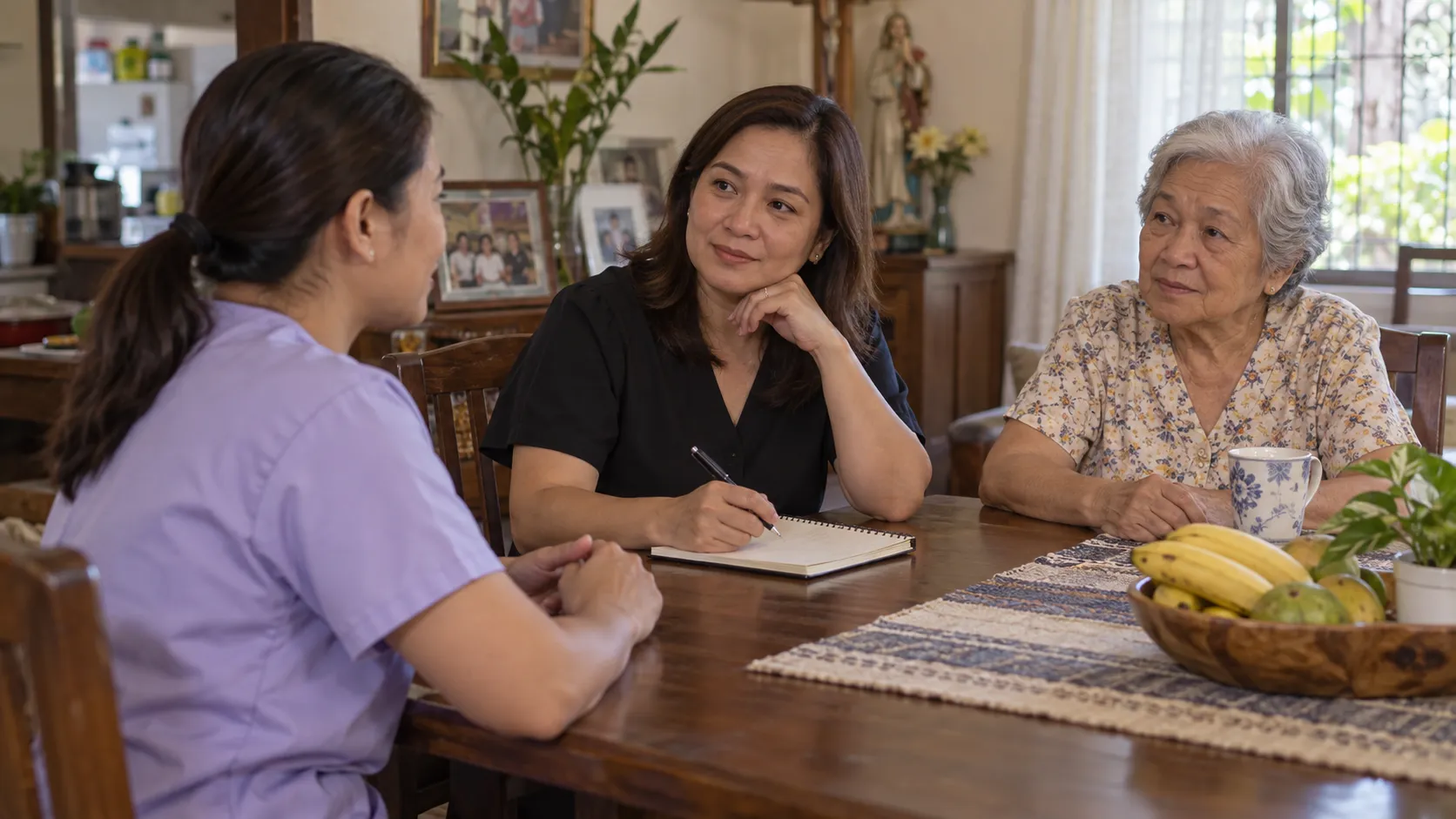
Direct answer: Write a one-page care plan first, then ask 31 questions grouped by experience, daily care, medication, dementia, emergencies, boundaries and communication, and listen for specific examples from past jobs, not promises. Confirm the answers with a paid trial shift and a transfer demonstration, check the TESDA National Certificate in the TESDA registry, call two former employers, and ask for an NBI clearance. A caregiver who says yes to everything, including injections, is a red flag.
Hiring a caregiver for a parent is not like hiring a driver or a cook. This person will see your mother undressed, hold your father's pills, and be alone with them at 3 a.m. A friendly interview does not tell you whether the person can move an adult safely or knows when to call you.
This guide is for Filipino families, and for OFW children hiring from abroad. For the wider choice between a live-in caregiver, shifts, an agency and a nurse, read hiring an elderly caregiver at home first.
Write the care plan before you interview anyone
Candidates cannot say whether they fit a job you have not described. A care plan is one page that lists what your parent needs. Send it to each candidate before the interview so they can decline early, and so every interview starts from the same facts.
| Topic | What to write down |
|---|---|
| Mobility | Can your parent walk alone, with a cane or walker, or only with help? Wheelchair or bed-bound? How many people does a transfer need? Any fall in the last year? |
| Memory and behaviour | Is there a dementia diagnosis? What time of day is hardest? Does your parent wander, refuse bathing, or accuse people of taking things? |
| Eating and swallowing | Diet limits from the doctor, choking history, and whether your parent uses a feeding tube. State who gives tube feeds today. |
| Medication | A list of each medicine, dose and time, and who sets up the pill organiser. Mark anything given by injection. |
| Toileting and hygiene | Continent or not, diaper use, bath routine, skin problems. |
| Night care | How often does your parent wake? Does someone need to be awake, or only reachable? |
| Contacts | The doctor, a nurse if you have one, the nearest hospital, and one named family member who decides when you are abroad. |
| The house | Live-in room or not, language and religion, pets, visitors, other helpers in the home. |
If your parent has a disability, an injury or a stroke, add what the doctor and therapist said about lifting and positioning. TESDA has a separate qualification for it, Caregiving (Clients with Special Needs) NC II. Ask whether the candidate holds it or has done similar work.
How to run the interview
Hold the interview at home so the candidate sees the bed, the bathroom and the stairs. Keep it to 45 to 60 minutes. Use the language the candidate is most comfortable in, whether Tagalog, Bisaya, Ilocano or English, because a nervous person answers better in their own words.
Have a second family member in the room. Let your parent say hello if able, and watch how the candidate speaks to them.
Ask the same questions of every candidate and score each answer from 1 to 3 on a sheet. Prefer "tell me about a time" questions. Anyone can say they are patient. Fewer people can describe the last time a patient hit them and what they did next.
If you are an OFW, hold the interview by video with a sibling or relative present at the house. Send the care plan the day before and ask the relative to take notes. Do not decide on one call.
The 31 caregiver interview questions
These caregiver interview questions and answers are grouped by topic. Use them as a script and adapt them to the care plan. The right-hand column shows what a good answer sounds like, so you can score it.
Experience and training
| # | Question | A good answer sounds like |
|---|---|---|
| 1 | Tell me about the last person you cared for. What did they need each day, and how long did you stay? | Names the condition, the daily routine, the length of stay, and why it ended. Speaks respectfully of the old employer. |
| 2 | Do you hold a TESDA Caregiving NC II? Which title, and when was it issued? | Gives the exact title, such as Caregiving (Elderly) NC II, the year, and can show the certificate. If there is none, says so and describes the training they did get. |
| 3 | What from your training do you still use every week? | Names something concrete, such as safe transfers, hand washing, or repositioning a bed-bound person on a schedule. |
| 4 | Have you looked after someone with my parent's condition? What was hardest? | Describes a real case, including the hard part. Admits what they have not done, for example "I have not handled a feeding tube." |
| 5 | Have you been asked to do tasks you were not trained for? What did you do? | Says they asked a nurse or the family first, or declined. Does not claim to do everything. |
Daily care
| # | Question | A good answer sounds like |
|---|---|---|
| 6 | Walk me through a normal morning with someone who needs help to wash and dress. | Explains each step, asks permission, keeps the person covered, lets them do what they still can, and checks the skin. |
| 7 | What do you do when someone refuses to eat or has trouble swallowing? | Sits the person upright, offers small bites and favourite food, follows the doctor's texture advice, logs what was eaten, and calls you if coughing at meals or refusal lasts two days. |
| 8 | How do you help someone use the toilet or change a diaper without embarrassing them? | Closes the door, explains what is happening, wears gloves, washes hands, checks the skin, and keeps the person dry. |
| 9 | How do you spot a pressure sore early? | Checks heels, hips and tailbone for red or broken skin, repositions the person, and reports the mark to the nurse or doctor. Does not treat it alone. |
| 10 | What would you cook for someone on a low-salt or diabetic diet? | Asks for the doctor's diet list first. Describes how they would cut salt or sugar in dishes the family already eats. |
Medication and safety
| # | Question | A good answer sounds like |
|---|---|---|
| 11 | Tell me the steps you follow every time you give a medicine. | Checks the label against the written list: right person, right medicine, right dose, right time. Watches the person swallow and writes it in the log. |
| 12 | The pharmacy gives a different brand, or the tablet looks different. What do you do? | Does not guess. Calls the family or asks the pharmacist before giving it. |
| 13 | Your patient refuses a pill. What now? | Tries again later, does not hide it in food without permission, records the refusal, and tells the family or the doctor. |
| 14 | An injection is due and no nurse is there. What do you do? | Says an injection is a nurse's task and calls you at once. A caregiver who offers to do it is giving a wrong answer. |
| 15 | How do you move someone from bed to chair, or to the toilet? | Locks the wheelchair brakes, tells the person each step, uses the person's strong side, and asks for a second helper when one person is not enough. Then shows you (see the transfer test below). |
Dementia and behaviour
| # | Question | A good answer sounds like |
|---|---|---|
| 16 | My parent accuses you of stealing, or does not recognise you. What do you do? | Stays calm, does not argue or take it personally, keeps the person safe, and tells the family. |
| 17 | At 5 p.m. my parent says they must go home, though they are home. How do you respond? | Does not argue. Redirects with a snack, a task or a familiar photo, and writes down the time and what worked. |
| 18 | How do you keep someone safe who tends to wander? | Keeps the gate locked, stays close, uses an ID bracelet, and tells you if a door was found open. Never locks the person in a room. |
| 19 | Your patient shouts, hits, or fights a bath. What do you do? | Steps back, checks for pain, hunger or a full bladder, tries again later, never hits or restrains, and reports it. |
Emergencies
| # | Question | A good answer sounds like |
|---|---|---|
| 20 | It is 2 a.m. and my parent is on the floor, awake and says nothing hurts. What do you do? | Does not lift alone. Checks for pain, head injury and bleeding, keeps the person warm, and calls you. Calls an ambulance for a head strike, a blood thinner, or if the person cannot stand. |
| 21 | My parent starts choking at dinner. | Calls for help, describes the first aid steps they were taught, and calls the emergency number if the airway stays blocked. |
| 22 | My parent's face droops, speech slurs, or they report chest pain or trouble breathing. | Calls the emergency number right away, notes the time it started, and gives no food, drink or pills. |
| 23 | What will you bring to the hospital? | The medicine list, PhilHealth and senior citizen ID, the doctor's number and any recent test results. Knows the nearest hospital. |
Boundaries and rest
| # | Question | A good answer sounds like |
|---|---|---|
| 24 | What hours and days can you work, and what rest do you need? | States the hours clearly and asks for a weekly rest day and a night's sleep. Not "any time, anything." |
| 25 | Do you have family or other obligations we should plan around this year? | Names them now, such as a child's school event or a fiesta trip, so you can book a reliever. |
| 26 | How do you feel about housework that is not related to my parent? | Offers laundry and tidying of the parent's room, and asks for the wider scope in writing before agreeing to more. |
| 27 | A relative asks you to do something the doctor advised against. What do you do? | Follows the care plan, says "let me call the person in charge," and does not take sides. |
Communication with family abroad
| # | Question | A good answer sounds like |
|---|---|---|
| 28 | How will you update me when I am in a different time zone? | Suggests a set daily message or call, and says what they will send, such as meals, medicines, mood and sleep. |
| 29 | What would make you call me in the middle of the night? | Lists a fall, a fever, chest pain, refusing food or drink, and a sudden change in confusion. |
| 30 | If my siblings disagree about my parent's care, what will you do? | Asks the family to name one decision-maker and takes instructions from that person. |
| 31 | What would make you want to leave this job? | Gives an honest answer, such as no rest days or late pay. Agrees to give notice. "Nothing" is not a believable answer. |
Run a paid trial shift and a transfer demonstration
Interviews measure talk. Two short tests measure skill.
The transfer demonstration
Ask the candidate to move a family member from bed to chair and back, then to a toilet seat. Use a healthy relative first, not your frail parent. Watch for these:
- They explain each step to the person before moving.
- They lock the brakes and clear the path.
- They keep their back straight and use their legs.
- They ask for help when the person is too heavy.
- They do not pull on the person's arm or shoulder.
If your parent has had a stroke or surgery, ask the hospital physiotherapist to teach the technique to the new caregiver and to watch one transfer with your parent present.
The caregiver trial day
A caregiver trial day is a paid shift, usually one to three days, with the care plan in hand. Agree the rate in writing before it starts and pay it that day. Tell the caregiver it is a trial and what you will decide afterwards. Have a family member present for the first shift. During it, watch:
- one full meal, from preparation to cleaning up;
- one medicine round, with the label check;
- one transfer and one toilet visit;
- how the caregiver talks to your parent when they refuse something; and
- whether they write in the log book without being reminded.
Red flags in a caregiver interview
- Says yes to every task, including injections, wound dressing, or anything that sounds medical.
- Cannot describe a single past case in detail.
- Offers a TESDA certificate but cannot give the qualification title or issue date, or the registry shows nothing.
- Wants to be paid in advance, or asks for a loan before starting.
- Talks over your parent.
- Refuses an NBI clearance, references, or a trial shift.
- Comes with a recruiter who asks you for a fee but will not name the caregiver's last employer.
One red flag does not end the conversation. Two or more do.
Checking caregiver references and documents
| Check | What it tells you | How to do it |
|---|---|---|
| TESDA National Certificate | The person passed a competency assessment for the named qualification. | Ask for the certificate and look the worker up in the TESDA Registry of Certified Workers. TESDA says employers can use it to verify a National Certificate, and that a certificate is valid for five years. |
| NBI clearance | No criminal record on file at the NBI. | Ask for a recent one and read how an NBI clearance works for helpers. Offer to pay the fee yourself so the cost does not become a barrier. |
| Barangay clearance | The barangay knows the person and has no complaint on record. | Ask for the clearance from the caregiver's own barangay. |
| Valid ID | The person is who they say they are. | Match the ID to the certificate and clearance. Photocopy it and hand the original back. |
| Medical certificate | Basic fitness to lift and care for an older adult. | Ask for a recent one from a doctor. Agree beforehand who pays. |
| Two references | How the person actually works. | Call both former employers yourself. |
On the reference call, ask these:
- How long did they work for you, and why did they leave?
- What did you have to correct in the first month?
- How did they handle a bad night, a fall, or a refusal?
- Would you hire them again?
A reference that praises everything and answers nothing is weak. If the caregiver comes from an agency, ask the agency for the same documents. To match the title on a certificate to the registry, see how TESDA names its Caregiving NC II qualifications.
When you need a nurse, not a caregiver
A caregiver helps with daily living. A nurse performs clinical tasks. The Philippine Nursing Act, RA 9173, puts the administration of written prescriptions, including injected medicines, inside nursing practice in Section 28(a). The TESDA training regulation for Caregiving (Elderly) NC II lists the unit as assisting a client in administering prescribed medication, which is reminders, handing over a dose and writing it down.
Book a nurse, at least for the first weeks, if your parent needs:
- injections or an intravenous line;
- wound dressing or a catheter;
- feeding through a tube, unless a nurse trains the caregiver and the doctor agrees in writing;
- oxygen or suction equipment; or
- close monitoring after surgery or a hospital discharge.
A common arrangement is a few nurse visits at the start. The nurse trains the caregiver on your parent's routine and says what the caregiver may do. Put the agreed duties in writing using the caregiver job description guide.
Legal basics once you hire
Two laws can apply to a home caregiver in the Philippines. Which one covers your hire depends on who you hire, so confirm it with the DOLE regional office if you are unsure.
| Question | RA 11965, Caregivers Welfare Act | RA 10361, Batas Kasambahay |
|---|---|---|
| Who is covered | A caregiver aged 18 or older whom TESDA has certified, or a listed licensed health professional, in a private home or facility, direct hire or placed. | A domestic worker in an employment relationship, which includes a yaya or general househelp. A household caregiver with no certificate usually falls here. |
| Contract | Written, signed before service starts, notarised, with a copy to the caregiver (Section 5). | Written, signed before service starts, with a copy to the worker (Section 11). |
| Minimum pay | Not lower than the applicable regional minimum wage (Section 9). | Set by regional wage orders for domestic workers. See the kasambahay minimum wage guide. |
| Pay schedule | Paid directly, at intervals not exceeding 16 days (Section 10). | Paid on schedule, directly to the worker. |
| Hours and rest | Overtime beyond eight hours a day and a night shift differential (Section 8). | An aggregate eight hours of rest each day and at least 24 consecutive hours each week (Sections 20 and 21). |
| Contributions | SSS, PhilHealth and Pag-IBIG. | SSS coverage after one month of service, with premiums paid by the employer and a share from workers earning ₱5,000 or more a month (Section 30). |
The RA 11965 text was approved on 23 November 2023, and the RA 10361 text on 18 January 2013. Check the minimum wage for your region on the NWPC regional pages, because wage orders change every year or two.
Whichever law applies, you should:
- sign the written contract before the first working day;
- enrol the caregiver with SSS, PhilHealth and Pag-IBIG in the first month at the latest;
- pay on time, directly to the caregiver, and pay overtime for long shifts;
- give a weekly rest day and time to sleep, and arrange a reliever; and
- keep identity cards with the caregiver and never hold back pay.
The how to hire a kasambahay legally guide covers barangay registration and the forms. For a caregiver pay range, read the caregiver salary guide. Helpers is a marketplace that connects families and caregivers. It does not give legal advice or run payroll.
Frequently Asked Questions
What are the best questions to ask a caregiver for an elderly parent?
Ask about the last person they cared for, how they give medicine, how they move someone from bed to chair, what they do after a fall at night, and how they respond when a person with dementia becomes angry or confused. Ask for examples from past jobs and listen for specific steps, not promises. Then confirm the answers with a paid trial shift.
How do I interview a caregiver if I work abroad as an OFW?
Write the care plan yourself, send it to each candidate before the call, and hold the interview by video with a sibling or relative in the room. Ask the same questions of every candidate and score the answers. Have the relative watch a paid trial shift in person, and check the TESDA certificate, NBI clearance and references before you decide.
Should I pay a caregiver for a trial day?
Yes. A trial shift is work, so agree the pay in writing before it starts and pay it on the day. Tell the caregiver it is a trial, name who will observe, and say what you will decide afterwards. An unpaid trial is a red flag about you as an employer, and good caregivers will refuse it.
How do I check if a caregiver has a real TESDA certificate?
Ask for the National Certificate and note the qualification title, the certificate details and the issue date. Then look the worker up in the TESDA Registry of Certified Workers at tesda.gov.ph/Rwac, which TESDA says employers can use to check whether a National Certificate is authentic. A National Certificate is valid for five years, so check the date too.
Is a live-in caregiver a kasambahay?
Often, but it depends on the caregiver. A caregiver with a TESDA certificate, or another qualification listed in RA 11965, is covered by the Caregivers Welfare Act. A household caregiver with no certificate is usually a domestic worker under RA 10361, the Batas Kasambahay. If you are unsure, ask the DOLE regional office or your barangay before you sign a contract.
A practical next step for families
Write the one-page care plan this week, then book two or three interviews with the same questions. Browse caregiver profiles to see experience, training and location before you call anyone. When you are ready to post the role, create a family account and attach the care plan so applicants know the job before they apply. More checklists are in the family guides.
Sources checked for this guide
- Republic Act No. 11965: Caregivers Welfare Act (The LawPhil Project; accessed 2026-10-16)
- Republic Act No. 10361: Domestic Workers Act (Batas Kasambahay) (The LawPhil Project; accessed 2026-10-16)
- Republic Act No. 9173: Philippine Nursing Act of 2002 (The LawPhil Project; accessed 2026-10-16)
- Training Regulations: Caregiving (Elderly) NC II (Technical Education and Skills Development Authority; accessed 2026-10-16)
- Registry of Certified Workers (Technical Education and Skills Development Authority; accessed 2026-10-16)
- National Certificates are not for sale (Technical Education and Skills Development Authority; accessed 2026-10-16)
- Current regional daily minimum wage rates, National Capital Region (National Wages and Productivity Commission; accessed 2026-10-16)
Last editorial review: 2026-10-16. Sources and regulated claims can change; confirm the current position before acting.
Related Guides

How to hire a verified yaya in Metro Manila
How families in Manila, Makati, and Taguig hire a yaya in 2026: the ₱7,800 NCR floor, a brief you can copy, and the checks that come before a contract.

Nanny vs Babysitter vs Yaya in the Philippines: Which to Hire
Nanny, babysitter, yaya or all-around helper? Compare duties, pay structure and kasambahay law under RA 10361 to choose the right childcare for your family.

Cook Salary in the Philippines: What to Pay a Household Cook
Cook salary in the Philippines for families: the kasambahay wage floor, pay factors, stay-in vs stay-out, benefits, food money rules and an offer checklist.