Housekeeping Jobs in the Philippines: Roles, Duties, and Applications
How to find housekeeping jobs in the Philippines, understand hotel versus household roles, use TESDA training, avoid recruitment scams, and apply with a stronger profile.

Helpers Philippines
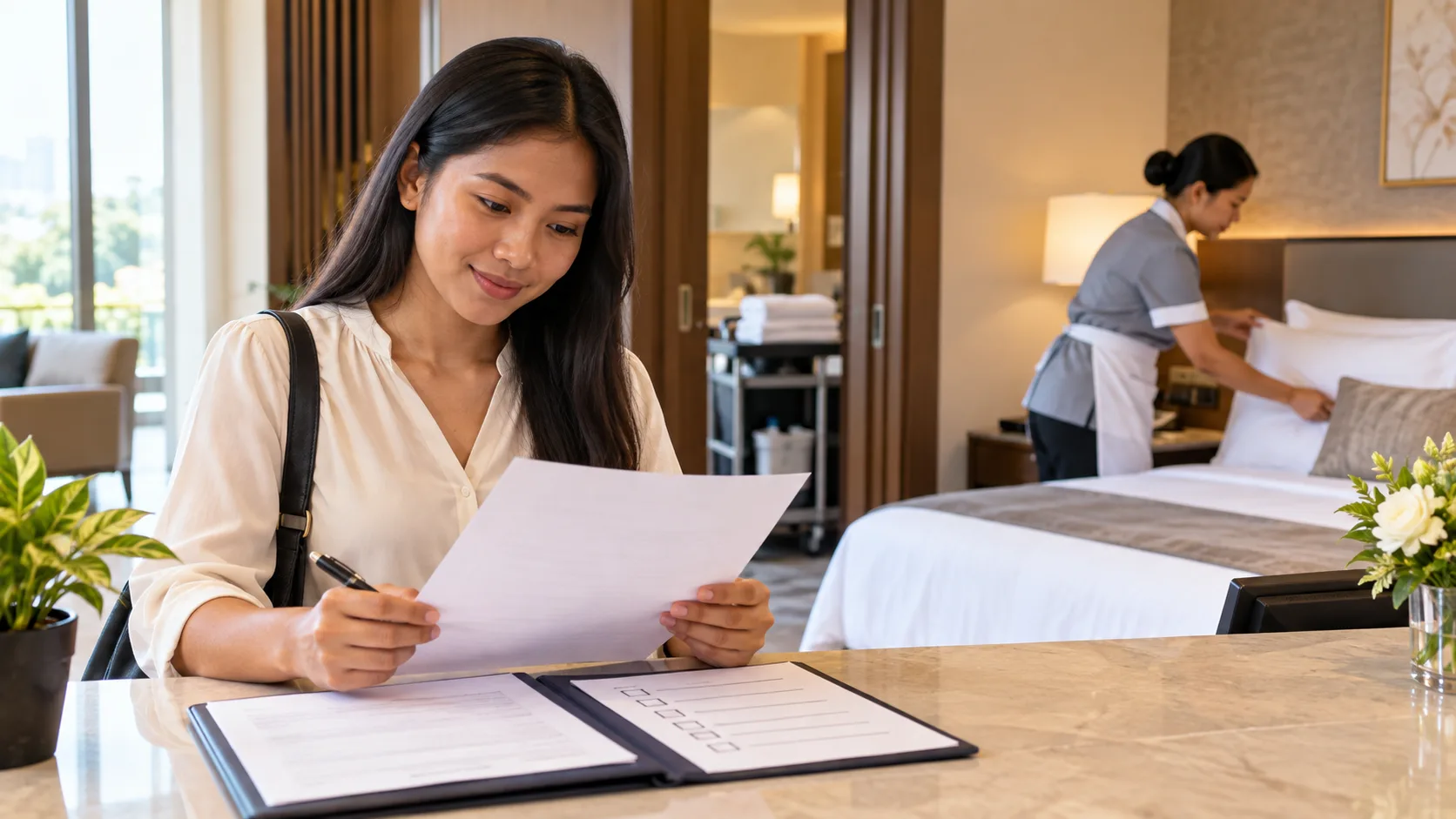
Direct answer: Housekeeping jobs in the Philippines include hotel room attendant, public-area cleaner, laundry attendant, household housekeeper, and other cleaning roles. Start by choosing the setting you want, then write the actual tasks, prepare a truthful profile, show relevant experience or TESDA training, and apply through a direct employer, legitimate job channel, or verified marketplace. Do not pay an unverified recruiter for a promised housekeeping job.
The word housekeeping appears in hotel vacancies, condominium jobs, cleaning companies, private homes, hospitals, and overseas recruitment advertisements. The title is not enough to tell you whether the work fits. A hotel room attendant may clean several rooms to a strict turnover time. A household housekeeper may work in one family home and handle laundry, organisation, and agreed domestic tasks. A public-area cleaner may work in lobbies, corridors, lifts, or facilities.
This guide helps Filipino applicants compare those roles, use the right TESDA qualification, write a better application, and spot a recruitment offer that deserves more checking.
What are housekeeping jobs in the Philippines?
Housekeeping jobs are paid cleaning and upkeep roles in which a worker prepares rooms, maintains assigned areas, handles linen or supplies, follows hygiene procedures, and reports problems to a supervisor or client.
The workplace creates much of the difference between jobs:
| Setting | Common work | What to ask before applying |
|---|---|---|
| Hotel or resort | Guest rooms, bathrooms, linen, public areas, room preparation, guest requests | Number of rooms, shift, overtime, standing and lifting, meals, uniform, and transport |
| Condominium or office | Common areas, corridors, lifts, toilets, waste, supplies, scheduled rounds | Assigned floors, equipment, building access, night work, and supervisor |
| Cleaning company | Residential or commercial visits, deep cleaning, move-in work, specialist tasks | Travel between sites, minimum hours, materials, team size, and pay per visit or hour |
| Private household | Cleaning, laundry, organisation, and other agreed domestic duties | Employer, live-in or live-out setup, household size, rest day, pay, and written scope |
| Overseas recruitment | A destination-country hotel, household, or facility role | DMW status, approved job order, contract, salary, fees, and destination rules |
Ask for the employer's legal name, workplace, schedule, pay, rest, and duties before you travel to an interview. A job that says "housekeeping" but expects childcare, cooking, driving, and live-in household work is not the same role.
Hotel housekeeping versus domestic work
TESDA's Housekeeping NC II is built around the accommodation and hospitality setting. Its training regulations cover preparing guest rooms, cleaning public areas and equipment, providing housekeeping services, valet or butler work, laundry, and workplace safety. The qualification can lead to jobs such as room attendant, public-area cleaner, laundry attendant, and housekeeping attendant.
TESDA's Domestic Work NC II is different. It covers household competencies such as cleaning living rooms, dining rooms, bedrooms, toilets, and kitchens; washing and ironing clothes and linen; preparing meals; and providing food and beverage service. It can also include elective household care, plant, or animal competencies depending on the workplace.
Read the TESDA Housekeeping NC II training regulations before paying for a course. If your goal is a hotel, resort, or accommodation job, Housekeeping NC II may be the closer match. If your goal is a private family home, compare the TESDA Domestic Work NC II regulation instead.
Neither certificate guarantees a job. A course can show training, but families and employers still look at attendance, communication, pace, references, safety, and whether you can do the actual routine.
How to find housekeeping jobs in the Philippines
Choose the workplace first
Decide whether you want hotel work, a cleaning-company route, a household role, or overseas work. The answer changes the words you use in your profile and the documents you need.
If you want a hotel job, search for room attendant, housekeeping attendant, public-area attendant, laundry attendant, or hotel cleaner. If you want a family-home role, search for housekeeper, cleaner, household helper, or domestic worker and read the duties carefully.
Write a specific profile
Start with your city, role, years of experience, availability, and the work setting you want. Then name the tasks you have really done:
- cleaned guest rooms or occupied homes;
- changed linen and made beds;
- cleaned bathrooms, kitchens, windows, or public areas;
- used a vacuum, mop, steam cleaner, or other equipment;
- sorted, washed, dried, folded, or ironed laundry;
- handled cleaning chemicals and reported hazards;
- worked to a room or visit checklist;
- dealt respectfully with guests, clients, children, pets, or older adults; and
- opened or closed a cleaning area safely.
Numbers help. Say how many rooms you handled in a shift, how many homes you visited in a week, or how many years you worked in a household. Do not copy a hotel's duties if you have only cleaned a private home. Truthful details are more useful than a longer list.
Apply through a verifiable channel
Use direct employer career pages, legitimate job boards, public employment channels, a verified marketplace, or a recruitment agency whose licence and offer you can check. On Helpers, browse housekeeping and household jobs and build a profile that matches the job descriptions families actually search.
For an overseas vacancy, verify the agency, job order, destination employer, contract, salary, and fees through the Department of Migrant Workers before you pay or travel. A recruiter who says that verification is unnecessary is giving you a reason to stop.
What to put in a housekeeping application
Your application should make it easy for an employer to answer three questions: can you do the work, can you arrive reliably, and do you understand the role?
Include:
- Your name, city, mobile number, and safe contact method.
- The role you want, such as hotel room attendant, public-area cleaner, or household housekeeper.
- Your recent work history with dates, setting, duties, and reason for leaving where appropriate.
- The areas and equipment you can clean safely.
- Training or certificates, including TESDA qualification or Certificates of Competency if you hold them.
- Your availability, preferred location, shift limits, and live-in or live-out preference.
- Two references who have agreed to answer a call.
- A clear statement of what you have not done yet, such as hotel work or specialist machine cleaning.
Do not put passport numbers, bank details, passwords, or a full government ID on a public profile. Share documents through a verified hiring process when the employer has a legitimate reason to see them.
What employers look for in a housekeeping worker
Employers usually want reliable routines more than impressive adjectives. They need someone who arrives on time, follows the checklist, notices a hazard, reports broken equipment, protects guest or family privacy, and finishes the assigned space to the agreed standard.
For hotel work, practice:
- reading a room assignment and prioritising checkout rooms;
- making a bed to the property's standard;
- cleaning a bathroom without cross-contamination;
- replacing linen and reporting stains or damage;
- restocking amenities accurately;
- handling lost property correctly; and
- communicating with a supervisor when a room is unsafe or cannot be released.
For a household role, practice:
- agreeing which rooms and tasks are included;
- asking how the family wants laundry, chemicals, and food areas handled;
- protecting private documents and conversations;
- reporting a broken item rather than hiding it; and
- separating cleaning from childcare, elder care, driving, and personal errands unless those duties are explicitly agreed.
TESDA training and where to check a course
TESDA publishes training regulations and lists registered training providers. Use the TESDA registered-provider search to check a school or program before paying. Confirm the course name, location, schedule, assessment, certificate, and whether the provider is currently registered for the qualification.
Housekeeping NC II is not the same as Domestic Work NC II. A hospitality course may cover guest rooms, public areas, laundry, customer service, and hotel procedures. Domestic Work NC II is closer to household cleaning, laundry, meal preparation, and domestic services. Choose based on the jobs you plan to apply for.
Do not pay an agent who promises that a certificate alone guarantees a placement. Training can improve your application, but a lawful job still needs a real employer, clear duties, pay, schedule, and safe conditions.
Red flags in housekeeping job offers
- The recruiter asks for money before identifying the employer, workplace, pay, and duties.
- The job title changes from hotel housekeeping to household work after you arrive.
- The employer wants your original passport or bank card for indefinite safekeeping.
- The advertisement promises unusually high pay but refuses to show a written offer.
- The recruiter asks you to use a tourist visa for work.
- The job requires childcare, driving, elder care, or heavy lifting that was never mentioned.
- The employer wants a trial shift with no pay or calls it training after the work is completed.
- The job is at an isolated address and the recruiter will not let you tell a trusted contact.
- The agency will not provide a receipt, licence detail, or complaint channel.
Pause when a role does not match its advertisement. You can lose more by rushing into an unsafe job than by missing one vacancy.
Present your housekeeping experience clearly
Families in the Philippines often use several words for the same role: housekeeper, cleaner, housemaid, kasambahay, or domestic worker. Use the word the job post uses, then explain the work underneath it. If you cleaned a Manila condo, say that. If you handled a family's laundry and cooking in Cebu, say that. If you worked in a hotel, name the room count, shift, and public areas.
Do not claim a TESDA certificate you have not earned, a hotel role you have not held, or a reference who has not agreed to be contacted. A shorter truthful profile is easier for a family to trust than a long list of skills with no example.
Before applying, read how Helpers approaches verification, complete the work history in your profile, and state your real commute and availability. Then create a helper account and apply to roles whose duties match your experience. Helpers is a marketplace, not a DOLE recruiter, so regulated agency or overseas steps must still be checked with the relevant authority.
Frequently Asked Questions
What are housekeeping jobs in the Philippines?
Housekeeping jobs can mean hotel room attendant, public-area cleaner, laundry attendant, household housekeeper, or another cleaning role. Read the duties and workplace carefully because hotel housekeeping and domestic work use different settings, schedules, skills, and employment terms.
Do I need TESDA Housekeeping NC II to apply for housekeeping jobs?
Not every job requires the certificate, but TESDA Housekeeping NC II can document skills for hotel and accommodation work. Domestic Work NC II is a different qualification with household competencies. Choose training that matches the job you want instead of adding a certificate that does not prove the relevant work.
How do I apply for housekeeping jobs in the Philippines?
Prepare a truthful one-page profile, list the rooms or properties you have cleaned, state your location and availability, gather references and relevant certificates, and apply through a direct employer, legitimate job board, or verified marketplace. Never pay an unverified recruiter for access to a job.
What should a housekeeping job description include?
It should state the workplace, rooms or public areas, cleaning standards, equipment, chemicals, schedule, breaks, pay, rest days, uniforms, transport, and who supervises the work. It should also state whether the job includes laundry, guest contact, lifting, childcare, cooking, or other duties.
Is hotel housekeeping the same as being a household helper?
No. Hotel housekeeping usually covers rooms, public areas, linen, guest service, and workplace procedures. A household helper works in a private home under a domestic-work arrangement. The duties, employer, workplace, contract, and legal rules can differ.
A practical next step for housekeeping applicants
Choose the setting you want, write the tasks you can prove, and check the training or recruitment provider before paying. Then get hired through Helpers with your city, availability, real experience, and preferred work setting, and apply only to roles whose duties match your application.
Sources checked for this guide
- Housekeeping NC II training regulations (Technical Education and Skills Development Authority; accessed 2026-09-18)
- Domestic Work NC II training regulations (Technical Education and Skills Development Authority; accessed 2026-09-18)
- TESDA registered training providers for Housekeeping NC II (Technical Education and Skills Development Authority; accessed 2026-09-18)
- Private employment agency guidance (Department of Labor and Employment, Philippines; accessed 2026-09-18)
- Rules for private agencies placing domestic workers (Department of Labor and Employment Region VII; accessed 2026-09-18)
- Helpers jobs and profiles (Helpers; accessed 2026-09-18)
Last editorial review: 2026-09-18. Sources and regulated claims can change; confirm the current position before acting.
Related Guides

Caregiver vs Caretaker in the Philippines: Which Title to Use
A caregiver looks after a person. A caretaker looks after a place. Here is which word belongs on your Philippine profile, your resume, and a family's search.


Domestic Helper Resume Sample Philippines: 3 Templates to Copy
Three complete domestic helper resume samples: a yaya, an all-around kasambahay, and a first-time applicant, plus who legally pays for your NBI and barangay clearance.
Caregiver Job Requirements in the Philippines: The Full Checklist
The papers, training, and interview answers Philippine families and home-care agencies ask for before hiring a caregiver, and who legally pays for them.